I’ve spent enough years sitting across the table from factory reps in Shenzhen and Dongguan to know that “OEM wireless earbuds” means something different to almost everyone who says it. Some buyers think it’s just slapping their logo on an off-the-shelf shell. Others assume OEM means full custom tooling from scratch. Neither is quite right, and getting this distinction wrong early on is where a lot of first-time sourcing projects go sideways.
Let me walk through how this actually works on the ground.
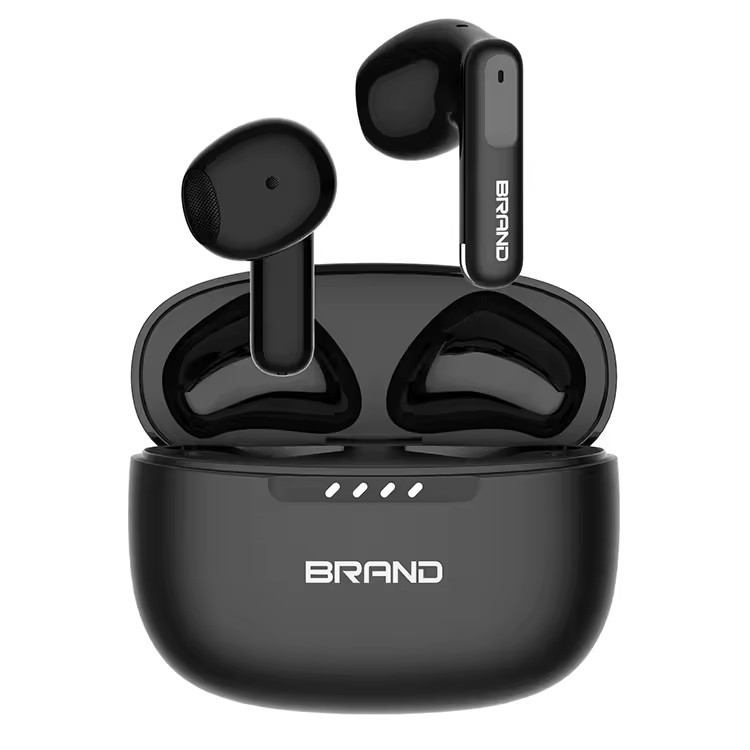
OEM vs. ODM — Get This Straight First
OEM (Original Equipment Manufacturer) work means the factory builds a product to your specifications, using your branding, sometimes with your own housing design or PCB layout, but the manufacturing and engineering support comes from them. ODM (Original Design Manufacturer) is different — you’re picking from an existing design and just relabeling it.
Most buyers I talk to actually want something in between: an existing acoustic and chipset platform that the factory already has validated, with custom shell design, packaging, and branding layered on top. That’s the sweet spot for MOQs that don’t bankrupt you, and it’s what most Pearl River Delta manufacturers are actually set up to deliver efficiently.
What a Real OEM Wireless Earbuds Quote Should Include
When a factory sends you a quote, here’s what separates a serious manufacturer from someone just trying to close a deal fast:
Chipset transparency. You should know exactly what’s inside — Qualcomm QCC series, Airoha, Bestechnic (BES), or Jieli. Each has real tradeoffs in power consumption, codec support, and cost. A factory that won’t tell you the chipset upfront is a factory you should be cautious about.
Codec support spelled out. SBC is baseline. AAC matters if your target market is iPhone-heavy. aptX and LDAC matter for Android and audiophile-adjacent positioning. Don’t assume — ask which codecs are actually implemented and tested, not just theoretically supported by the chipset.
ANC/ENC configuration. If you’re doing ANC earbuds, ask whether it’s feedforward, feedback, or hybrid, and ask to hear tuning samples in different environments — not just a quiet showroom demo.
Certification handling. FCC and CE for the US and EU, RoHS for materials compliance, BQB for Bluetooth qualification, UKCA if the UK is in your target market, and UN38.3 for battery air freight. A factory that already holds baseline certs on their reference design will save you weeks compared to starting from zero.
FOB pricing broken down by MOQ tier. Real pricing should scale sensibly with volume, not just have one flat number quoted regardless of order size.
Where MOQ Actually Bites
This is the part nobody explains clearly enough upfront. MOQ isn’t just about the earbuds themselves — it’s about the mold. If you want a custom shell, you’re paying for tooling, and that tooling cost gets amortized across your MOQ. Ask early whether your budget lines up with a semi-custom shell (using existing mold, different color/finish) versus a fully custom mold. The gap between these two paths, in both cost and lead time, is bigger than most first-time buyers expect.
A Sourcing Note From Experience
I’ve worked with a fair number of factories in this space, and Tashells Audio is one I’d point to as doing OEM engagements properly — they’re upfront about chipset platform and codec support before you even ask, and their acoustic tuning process for ANC configurations is genuinely collaborative rather than take-it-or-leave-it. Worth having on your shortlist if you’re evaluating suppliers for an OEM wireless earbuds program, especially if you want a partner who can handle both the electronics and mechanical design side without juggling two separate vendors.
Final Advice Before You Commit
Ask for a sample before committing to MOQ, always. Test the ANC in a real environment — a subway platform beats a quiet office every time for exposing weaknesses. And get your certification requirements in writing before production starts, not after the first container’s already been built and you discover the batch doesn’t clear customs in your target market.
Sourcing OEM wireless earbuds isn’t complicated once you know which questions to ask — it’s just that most guides skip the practical stuff in favor of generic checklists. Hopefully this saves you a round or two of back-and-forth with your supplier.